Right now you are surfing a limited version of umu.se. What does this mean?

"False"
Skip to content
printicon
Main menu hidden.
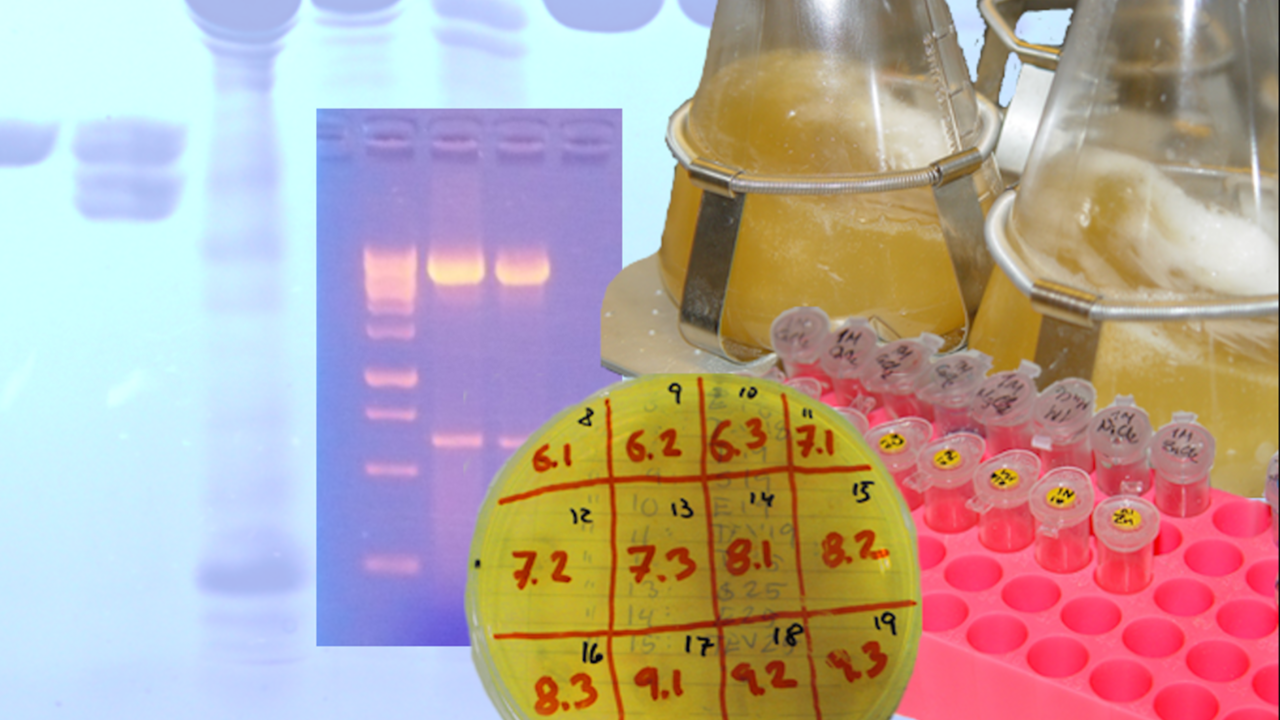
Image for the CPEP course announcement

Practical Course on rapid Cloning, Protein Expression and Purification, CPEP-2024 (3 ECTS), 18-27 March 2024

Image: Uwe Sauer

Graduate course organised in collaboration with the Protein Expertise Platform (PEP) and the Protein Production Sweden (PPS) national infrastructure. Practical sessions are complemented with lectures and round-table discussions about techniques, problems and solutions.

Course information

Date:  18 - 27 March 2024 (8 working days)

Start: 09:00, Monday, 18 March.

Place: Biochemistry teaching lab, KB.F4.04, Linnaeus väg 6, KBC-F building, 4th floor (2 stairs up).

Registration deadline: 8 March 2024.

Cost: 5.000 SEK per participant.

Registration form: see below.

Participants: max. 12 (PhD students, post-docs or technical staff)

Credits: 3 ECTS on a pass – no pass basis. Successful full-time participation is required to receive a pass certificate.

Leader: Uwe Sauer, E-mail: uwe.sauer@umu.se    

Instructor: Gunter Stier, Heidelberg Univ., Germany, E-mail: gunter.stier@bzh.uni-heidelberg.de  

The CPEP-24 course is organized in collaboration with the Protein Expertise Platform (PEP) at KBC and the Protein Production Sweden (PPS) national infrastructure.

This practical course is based on the bi-annual, one-week EMBO PEPC courses held at the EMBL-Hamburg outstation.


Aims

After the CPEP course you should know how to:

  • Plan and successfully execute your project. Bring your own project(s)*!!!
  • Make efficient use of bioinformatics tools for planning and analysis of protein expression projects
  • Design PCR primers and codon optimize genes
  • Apply various fast cloning and mutagenesis techniques
  • Use medium-throughput approaches for cloning and protein expression in E. coli
  • Carry out fast parallel cloning of your gene(s) into vectors containing different tags and fusion proteins
  • Use of fusion proteins and associated purification strategies
  • Test for optimal protein production: different strains, growth conditions and fusion partners
  • Co-express components of protein complexes and their purification strategies
  • Prepare and use of auto-inducing medium
  • Do protein expression mini-screens
  • Scale-up positive screening candidates to a protein midi-preparation using purification machines
  • Troubleshoot problems and apply strategies to solve them
  • Apply special protein labelling techniques, such as 15N-labeling for quick NMR analysis
  • Interpret simple NMR measurements
  • Crystallize proteins
  • Carry out electron microscopy sample preparation, e.g. negative staining techniques
  • Participants will be guided to present short seminar talks on selected topics.

Special emphasis for the 2024 course

  • Protein expression in eukaryotic cells
    • Expression in Human Embryonic Kidney (HEK) cells
      o Expression in Baculovirus infected Sf9 cells
      o Expression in plant cell suspensions

Additional demonstrations and seminars will include the use of:

  • Protein purification with “Äkta” and BioRad machines
  • Protein analysis using Mass-Photometry
  • The Mosquito crystallization robot, crystal imaging facility
  • NMR characterization of 15N labeled proteins
  • EM facility – first approach to electron microscopy measurements

(*) If you bring your own project(s), please contact the instructors no later than 28 February 2024. You can also work on a project provided by the course leaders.

Registration

The registration is closed!

Contact

Uwe Sauer
Associate professor
E-mail
Email
Latest update: 2024-03-13